Blog

  • Laser Dentistry: How It Works and When It Is Used

    Laser Dentistry: How It Works and When It Is Used

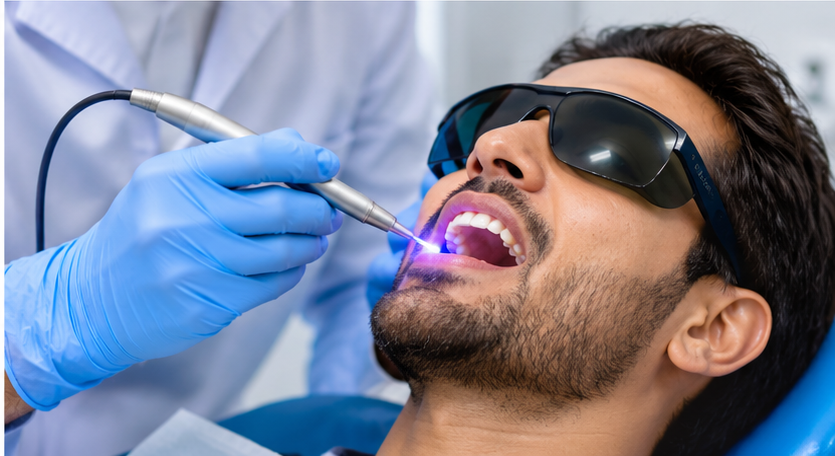
    The word “laser” can sound worrying, but in dentistry it is a gentle and precise tool. A dental laser uses focused light energy to treat a small, specific area, instead of relying only on traditional instruments such as drills and scalpels.

    Where lasers are commonly used

    • Gum treatment and reshaping of gum tissue
    • Soft-tissue procedures in the mouth
    • Other selected procedures where precision matters

    Your dentist will tell you whether a laser is suitable for your particular treatment.

    Benefits of laser dentistry

    • Greater precision: the laser works only on the targeted area
    • Less tissue trauma in selected procedures
    • Potentially faster recovery compared with conventional methods
    • A modern, minimally invasive approach that many anxious patients find more comfortable

    Is it safe?

    Yes, when used by a trained dentist with the right protective measures, such as special eyewear during the procedure.

    Does it replace all other dental tools?

    No. Lasers are very useful for certain treatments, but traditional instruments remain the better choice for many others. A good treatment plan uses the right tool for each step.

    Visit Isha Dental Care

    If you have been delaying gum or soft-tissue treatment out of fear, laser dentistry may make it easier for you. Visit Isha Dental Care, Beeramguda, to find out if laser treatment suits your case. Call 99637 68764 or book your appointment online. We are open Monday to Sunday, morning and evening.

  • Digital Smile Designing: See Your New Smile Before Treatment Begins

    Digital Smile Designing: See Your New Smile Before Treatment Begins

    Many people are unhappy with something about their smile: gaps, uneven teeth, stains, or teeth that look too small or worn. Smile designing is a planned way to correct these concerns together, so the final result suits your face.

    What is digital smile designing?

    Instead of guessing how your teeth will look after treatment, the dentist plans your smile digitally first. Photos and records of your teeth are used to design tooth shape, size and position around your facial features. You get to understand the result you are working towards before treatment starts.

    Why it helps

    • The plan is tailored to your face and your preferences
    • Tooth proportions are balanced for a natural look
    • You know the steps, the time and the treatments involved
    • Changes can be discussed before anything is done to your teeth

    Treatments that may be part of the plan

    Depending on your needs, a smile design may include teeth whitening, veneers, crowns, aligners or gum contouring. Some people need only one of these; others need a combination.

    How long does it take?

    It depends on the plan. Simple changes may take a few visits, while a plan that includes aligners takes longer. Your dentist will give you a clear timeline at the start.

    Questions to ask at your consultation

    • Which treatments do I need, and why?
    • How long will the result last?
    • How do I care for my new smile?

    Visit Isha Dental Care

    Planning a smile makeover for a wedding, a new job or simply for yourself? Visit Isha Dental Care, Beeramguda, for a smile design consultation and see your plan before you begin. Call 99637 68764 to book. We are open all seven days.

  • Zirconia vs E-max Crowns: Which Crown Is Best for Your Tooth?

    Zirconia vs E-max Crowns: Which Crown Is Best for Your Tooth?

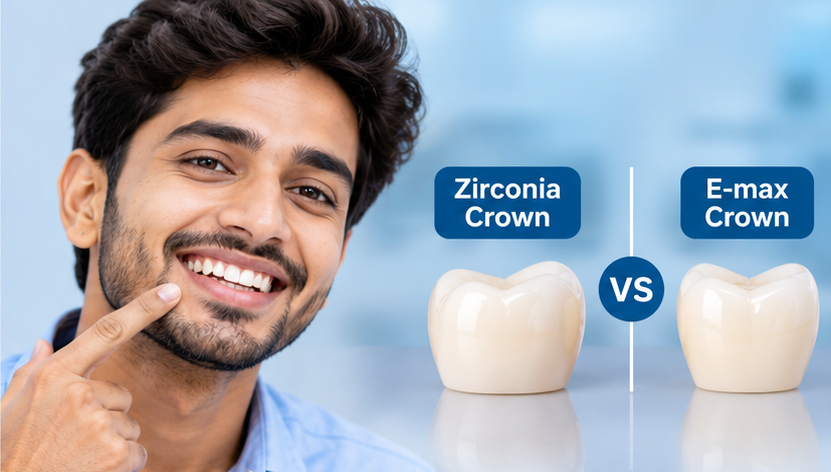
    A crown is a cap that covers a damaged tooth to protect it and restore its shape. You may need one after a root canal, for a cracked or badly worn tooth, or to cover a large filling. Today, metal-free crowns are the preferred choice for many patients, and the two most popular types are zirconia and E-max.

    Zirconia crowns

    Zirconia is a very strong ceramic. It handles heavy chewing forces well, which makes it a common choice for back teeth. Modern zirconia also looks natural, with no dark metal line near the gum.

    E-max crowns

    E-max is made from a glass ceramic that lets light pass through much like natural enamel. This gives it a very lifelike appearance, so it is often chosen for front teeth where looks matter most.

    How to choose

    • Position of the tooth: back teeth usually need more strength, front teeth more beauty
    • Your bite: people who grind their teeth may need a stronger material
    • How much tooth is left: this affects which crown fits best
    • Your smile goals: colour and shape are matched to your other teeth

    Your dentist will examine the tooth and recommend the material that suits your case.

    Caring for your crown

    Brush twice a day, clean between the teeth daily, avoid biting very hard objects, and come for regular check-ups. With good care, a crown can serve you for many years.

    Visit Isha Dental Care

    Not sure which crown is right for you? Visit Isha Dental Care, Beeramguda, where we explain your options clearly and match the crown to your tooth and your smile. Call 99637 68764 or book online for a consultation.

  • Wisdom Tooth Pain: When Does It Need to Be Removed?

    Wisdom Tooth Pain: When Does It Need to Be Removed?

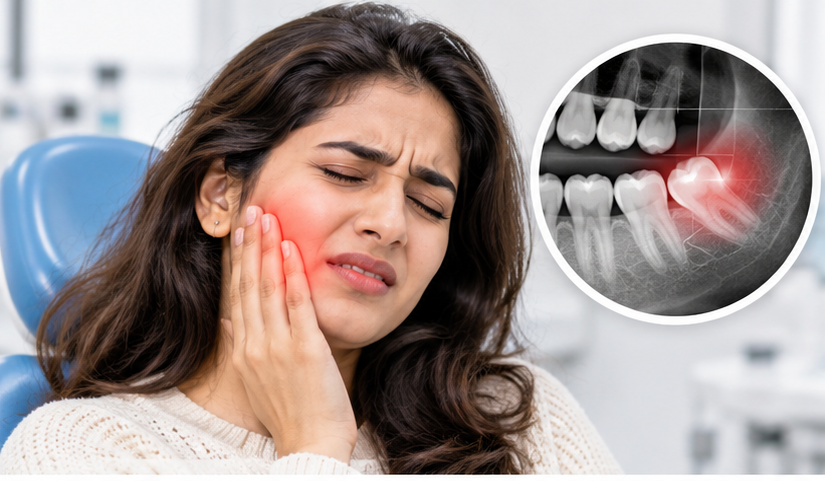
    Wisdom teeth are the last teeth to come in, usually between the ages of 17 and 25. For some people they grow in straight and cause no trouble. For many others there is not enough space in the jaw, and the tooth gets stuck under the gum or grows at an angle. This is called an impacted wisdom tooth.

    Signs your wisdom tooth needs attention

    • Pain or pressure at the back of the mouth
    • Swollen, red or bleeding gums behind the last tooth
    • Difficulty opening your mouth fully
    • Food getting stuck often, with bad breath or a bad taste
    • Pain that spreads to the ear or jaw

    Does every wisdom tooth need removal?

    No. A wisdom tooth that has come in fully, is easy to clean and causes no pain can usually stay. Removal is advised when the tooth is impacted, keeps getting infected, damages the tooth next to it, or has decay that cannot be treated properly. An X-ray shows the position of the tooth and its roots and helps the dentist decide.

    What the procedure involves

    The area is numbed with local anaesthesia, so you feel pressure but not pain. The tooth is removed, sometimes in small pieces, and the area is cleaned. Most people go home the same day.

    Recovery tips

    • Bite gently on the gauze as instructed
    • Eat soft, cool food for the first couple of days
    • Avoid smoking, straws and vigorous rinsing early on
    • Take the prescribed medicines as directed

    Visit Isha Dental Care

    If you have pain or swelling at the back of your mouth, do not wait for it to get worse. Visit Isha Dental Care, Beeramguda, for an examination and clear advice on whether your wisdom tooth needs removal. We are open Monday to Sunday. Call 99637 68764 to book your appointment.