Your smile is one of the first things people notice. Stained, chipped, crooked or gapped teeth can make you hold back from smiling freely in photos, at work or at family functions.
Modern dentistry offers several solutions for improving the appearance and alignment of teeth. At Ishanvi Dental Care & Implant Center in Kukatpally, Hyderabad, cosmetic smile designing and orthodontic treatment are planned around your facial features, dental health and personal goals.
This guide explains the different smile designing treatments, types of braces and aligners, and how to choose the right option for your smile.
What Is Smile Designing?
Smile designing, also known as a smile makeover, is a personalised dental treatment plan that focuses on improving the appearance of your smile.
Rather than using a single procedure, smile designing may combine different cosmetic and restorative dental treatments to achieve the desired results.
During the planning process, the dentist evaluates the shape, colour and alignment of your teeth, along with your gum line, lips and facial features. Based on this assessment, a suitable treatment plan is recommended.
What Dental Problems Can Smile Designing Correct?
Smile designing can address several cosmetic dental concerns that affect the overall appearance of your smile.
People with yellow or stained teeth may benefit from professional teeth whitening, while chipped, worn or uneven teeth can be improved using dental bonding, veneers or crowns.
Gaps between teeth, slightly crooked or overlapping teeth, and irregularly shaped teeth may also be corrected through appropriate cosmetic or orthodontic procedures.
For patients who feel that too much gum tissue is visible when smiling, gum contouring may help improve the balance between the teeth and gums.
Smile designing can also include replacing missing teeth with dental implants or bridges, depending on the patient’s oral health and treatment requirements.
Different Treatments Used in Smile Designing
A smile makeover may involve one or more dental procedures. The choice of treatment depends on the condition of the teeth, the patient’s expectations and the dentist’s recommendations.
| Treatment | What It Does | Typical Time |
|---|---|---|
| Teeth whitening | Lightens natural tooth colour | One visit, about an hour |
| Composite bonding | Repairs chips and closes small gaps using tooth-coloured resin | One visit |
| Dental veneers | Thin shells bonded to the front of teeth to improve colour and shape | Two to three visits |
| Dental crowns | Cover badly damaged or discoloured teeth | Two to three visits |
| Gum contouring | Reshapes the gum line, often using a dental laser | One visit |
| Braces or aligners | Straighten teeth and correct bite alignment | Several months to two years |
| Dental implants or bridges | Replace missing teeth | Varies |
The duration of treatment may vary depending on individual dental conditions and the complexity of the procedure.
How Is a Smile Makeover Planned?
A successful smile makeover begins with a detailed consultation and evaluation of your oral health.
Initial Consultation: The dentist discusses your concerns, expectations and the changes you would like to make to your smile.
Dental Examination: Your teeth, gums and bite are examined. Photographs, dental X-rays, impressions or digital scans may be taken to understand your dental structure.
Personalised Treatment Plan: Based on the examination, the dentist recommends suitable procedures and explains the expected treatment duration and cost.
Oral Health Preparation: Existing dental problems such as cavities or gum disease are treated before cosmetic procedures begin.
Treatment and Follow-Up: The planned dental procedures are completed, followed by instructions on maintaining your results through proper oral hygiene and regular dental visits.
Orthodontic Treatment: More Than Just Straight Teeth
Orthodontic treatment focuses on correcting the position and alignment of teeth.
Although braces are commonly associated with improving the appearance of a smile, orthodontic treatment can also improve bite function and make teeth easier to clean.
People with crowded or crooked teeth, gaps between teeth, protruding front teeth, or bite problems such as overbite, underbite and crossbite may benefit from orthodontic evaluation.
In some cases, orthodontic treatment may also help patients who experience difficulty biting or chewing properly.
At Ishanvi Dental Care & Implant Center, the appropriate treatment option can be discussed after evaluating your teeth, gums and bite alignment.
Types of Braces and Clear Aligners
Modern orthodontics offers different teeth-straightening options to suit individual dental requirements, lifestyle preferences and budgets.
Metal Braces
Metal braces use brackets and wires to gradually move teeth into their correct positions.
They are a commonly used orthodontic treatment option and are generally effective for correcting a wide range of alignment and bite problems.
Metal braces are also typically more economical than some other orthodontic options.
Ceramic Braces
Ceramic braces work similarly to traditional metal braces but use tooth-coloured brackets that are less noticeable.
They are often preferred by patients who want a more discreet appearance while undergoing orthodontic treatment.
However, ceramic braces may require additional care to prevent staining and maintain their appearance.
Clear Aligners
Clear aligners are nearly invisible, removable trays designed to gradually move teeth into better alignment.
Unlike fixed braces, clear aligners can be removed while eating, brushing and flossing.
However, they must be worn for most of the day as instructed by the dentist to achieve the planned results.
Metal Braces vs Ceramic Braces vs Clear Aligners
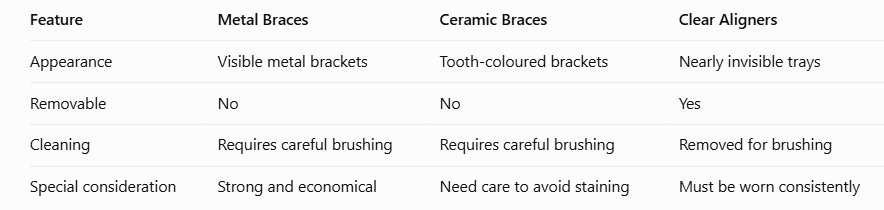
Your dentist will recommend the most suitable orthodontic treatment based on your dental condition, lifestyle and budget.
Am I Too Old for Braces?
Many adults believe that braces are only suitable for children and teenagers. However, orthodontic treatment can be performed at different ages as long as the teeth, gums and supporting bone are healthy.
Adults who prefer a less noticeable treatment option may consider ceramic braces or clear aligners.
For children, an orthodontic evaluation around the age of seven can help identify developing alignment or bite problems at an early stage.
The ideal treatment approach depends on the patient’s dental health and orthodontic requirements.
Life With Braces: Simple Tips for Better Results
Maintaining good oral hygiene is particularly important during orthodontic treatment.
Patients wearing braces should brush carefully after meals and use interdental brushes to clean around brackets and wires. Hard and sticky foods such as nuts, chikki and chewing gum should be avoided because they may damage orthodontic appliances.
Hard fruits should be cut into smaller pieces rather than bitten directly.
Attending scheduled orthodontic adjustment appointments is also important for monitoring treatment progress.
After completing orthodontic treatment, retainers should be worn as instructed to help prevent teeth from shifting back towards their previous positions.
How to Keep Your New Smile Bright
Maintaining the results of smile designing and orthodontic treatment requires consistent oral care.
Brush your teeth twice daily and clean between your teeth regularly to prevent plaque accumulation.
Limit frequent consumption of tea, coffee and strongly coloured beverages, or rinse your mouth with water after consuming them.
Avoid tobacco products, which can contribute to tooth staining and gum problems.
Regular professional dental cleanings, generally every six months depending on your oral health needs, can help maintain healthy teeth and gums.
Patients who grind their teeth may also benefit from a night guard if recommended by their dentist.
Frequently Asked Questions
How long does orthodontic treatment take?
Most orthodontic treatments take approximately 12 to 24 months. However, mild alignment corrections may require less time, while complex cases may take longer.
Is teeth whitening safe?
Professional teeth whitening is generally safe when performed or supervised by a qualified dentist. Some patients may experience temporary tooth sensitivity, which usually settles within a few days.
Do dental veneers damage natural teeth?
Traditional dental veneers usually require the removal of a thin layer of enamel to create space for the veneer. Your dentist will explain whether veneers or a more conservative treatment option is appropriate for your teeth.
How long do smile makeover results last?
The longevity of smile makeover treatments depends on the procedures performed and how well the teeth are maintained. Teeth whitening results may last approximately one to three years, while veneers and crowns can last ten years or longer with appropriate care.