“My knees always ache more when it gets cold.” It is something orthopaedic doctors hear every winter. In fact, two in every three people with osteoarthritis of the knee, hip or hand say cold weather triggers their symptoms.
But does the cold actually harm your joints? And more importantly, what can you do about winter aches and stiffness? Here is what the research says, and the practical steps that help.
Does cold weather really make joint pain worse?
The honest answer is that the evidence is mixed.
- A European study of 810 older adults with osteoarthritis found that joint pain was linked to humidity, and that the effect of humidity was stronger in cold weather.
- On the other hand, a large analysis by researchers at the University of Sydney, which looked at data from more than 15,000 people, found no direct link between changes in temperature or humidity and most knee, hip or back pain.
The same researchers pointed to other things that tend to change in winter and can make pain worse: poor sleep and low mood are both known triggers for knee and back pain. Many people also move less when it is cold, and joints that are not moved tend to feel stiffer.
So the cold itself may not damage your joints, but winter habits can make pain feel worse. That is actually good news, because habits are something you can change.
What helps: keep moving
Exercise is one of the most strongly recommended treatments for osteoarthritis of the knee and hip. The American College of Rheumatology’s guidelines, updated in 2026, give their strongest recommendations to exercise and weight loss (for people who are overweight). No single type of exercise has been shown to be better than the others, so the best exercise is one you will keep doing.
Good options include:
- Walking on flat ground, starting with short distances and building up slowly.
- Strengthening exercises for the thigh muscles, which support the knee.
- Cycling on a stationary bicycle, or exercise in water if you have access to a pool.
- Gentle stretching and balance exercises, or yoga adapted to your joints.
A simple 10-minute indoor routine for stiff knees
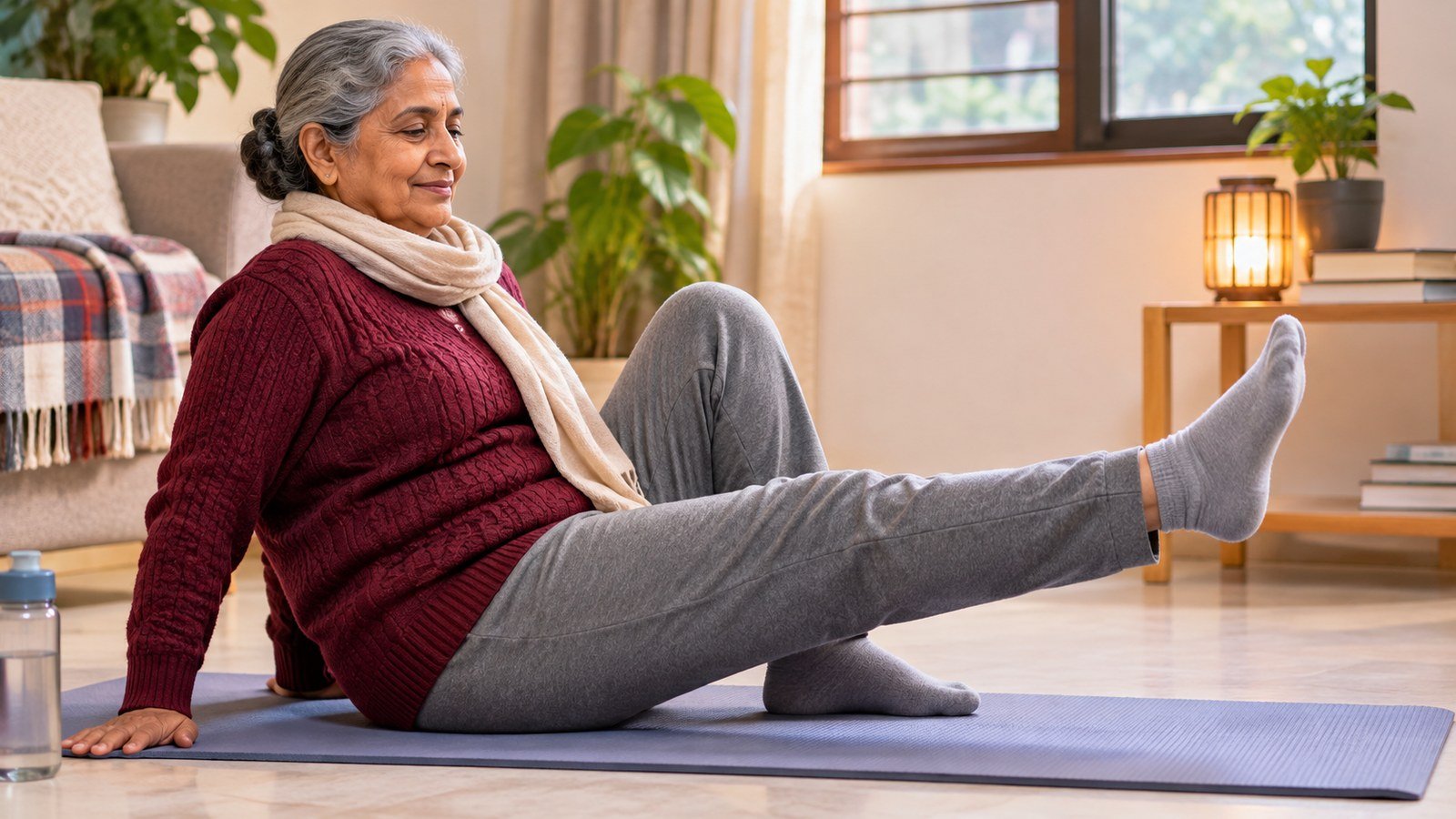
On mornings when it is too cold to walk outside, these gentle exercises can be done at home. Do each one 10 times, on both sides.
- Thigh tightening: sit with your leg straight, press the back of your knee down into the bed or floor, hold for 5 seconds and relax.
- Straight leg raise: lie on your back with one knee bent, keep the other leg straight and lift it to the height of the bent knee, then lower slowly.
- Heel slides: lie on your back and slowly slide your heel towards you, bending the knee as far as is comfortable, then straighten.
- Sit to stand: stand up slowly from a firm chair without using your hands if you can, then sit down slowly.
Some discomfort while exercising is normal at first. Stop if you feel sharp pain, and ask your doctor or physiotherapist to adjust the routine for you.
Other winter habits that help
- Warm up before activity. Spend a few minutes moving your joints gently before a walk or housework.
- Dress in layers on cool mornings. Many people find warmth eases stiffness, even if it does not change the joint itself.
- Protect your sleep. Keep regular sleep times, and talk to your doctor if pain keeps you awake.
- Watch your weight. Less movement and festive food in winter can add kilos, and extra weight puts more load on the knees and hips.
- Wear supportive footwear with a cushioned sole.
Be careful with painkillers
Do not take painkillers from the pharmacy regularly without medical advice. Some common pain tablets can affect the stomach, kidneys or blood pressure when used for long periods, especially in older adults. Your doctor can suggest safer options for you, which may include pain-relief gels applied on the skin.
When to see an orthopaedic doctor
Winter aches that ease as you move around are common. See a doctor if you notice:
- A joint that is swollen, red or hot, especially with fever
- Pain after a fall or injury, or a joint that locks or gives way
- Pain that wakes you at night or is present even at rest
- Morning stiffness lasting longer than about 30 minutes, or swelling in several small joints of the hands or feet
- Pain that stops you from walking, climbing stairs or doing daily tasks
- Joint pain with unexplained weight loss or tiredness
Frequently asked questions
Is walking bad for knee arthritis?
No. For most people with knee osteoarthritis, regular walking and other exercise are recommended and help reduce pain and stiffness over time. Start slowly and build up gradually.
Should I use a hot or cold pack?
Many people find warmth helps morning stiffness, while a cold pack can ease a joint that is swollen after activity. Wrap packs in a cloth and use them for short periods to protect your skin. If a joint is very swollen, red or hot, see a doctor.
Is joint pain just a normal part of ageing?
Joint problems become more common with age, but pain that limits your daily life is not something you simply have to accept. A proper examination can find the cause and the right treatment for you.
Get your joints checked
If joint pain is making winter mornings hard, our Orthopaedics team can examine your joints, find the cause of the pain and plan treatment that suits you. You can contact Mithra Hospitals to book a consultation.
This article is for general information and awareness only. It is not a substitute for medical advice, diagnosis or treatment. Please consult a qualified doctor before starting a new exercise programme or medicine.
Sources
- RNZ / The Conversation: University of Sydney researchers on weather and aches and pains
- University of Sydney: No, your aches and pains do not get worse in the cold
- Journal of Rheumatology (2015): Weather conditions and joint pain in older people with osteoarthritis
- Healio: New ACR osteoarthritis guidelines (2026)
- ACP Internist: Exercise and weight loss for chronic knee pain (2019 ACR/AF guideline)


